
Is Self-Insurance the Endgame for Space Insurance?
DILIGENCE & RISK REVIEW
David Dong
9/27/20265 min read
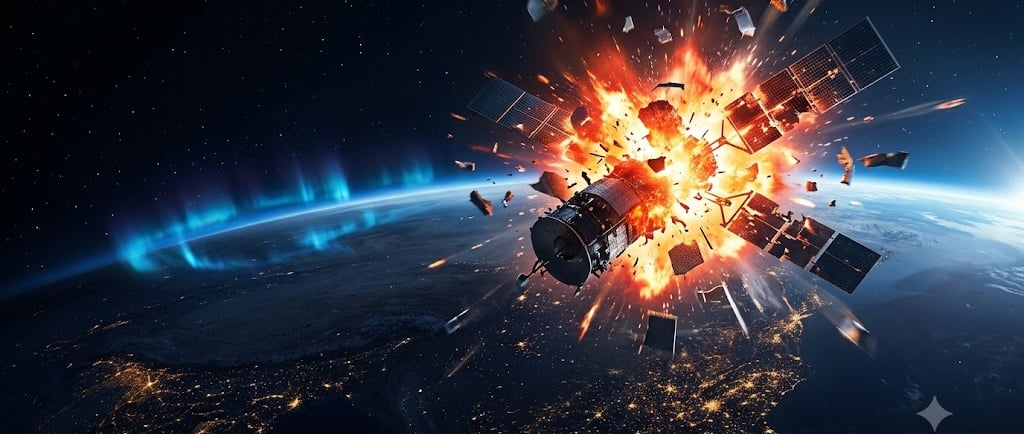
When discussing risk in commercial space, one comparison that frequently comes up is SpaceX’s apparent logic of self-insurance.
At first glance, the idea is highly appealing.
If a company has strong control over its own technology, manufacturing, launch, and operations stack—and also possesses a large amount of first-hand engineering and production data—then it may understand its own risk better than any external insurer ever could. In that case, instead of paying substantial premiums to the market, the company may choose to retain part of the risk internally, build its own risk pool, or adopt partial self-insurance in order to improve capital efficiency.
From this perspective, self-insurance is not “anti-insurance.” It is better understood as a form of capital optimization built on superior risk visibility and data transparency.
1. Self-insurance only works when you can truly “see” your own risk
The core of a SpaceX-style self-insurance model is not simply having deep pockets. It depends on three more fundamental conditions:
First, strong control over the system. This includes as much control as possible over rockets, satellites, software, supply chains, and launch cadence.
Second, a sufficiently large base of real operating data. Launch success rates, on-orbit failure rates, component life cycles, batch consistency, anomaly records, and operational response data all feed back into risk assessment.
Third, risk that is sufficiently measurable. A company must at least broadly understand which losses are high-frequency and low-severity, which are low-frequency and catastrophic, which risks can be reduced through engineering improvements, and which must simply be absorbed by capital.
Under those conditions, self-insurance has real logic. The company is not merely “taking a bet”; it is using its own data and operational knowledge to replace part of the pricing function that would otherwise be performed by the insurance market.
2. But self-insurance is not a universal solution—the most dangerous risks are often the ones you cannot fully see
As the industry ecosystem becomes more complex, and as the number of external variables increases, any single actor’s ability to fully understand and absorb risk declines.
In modern commercial space, risk is no longer just about whether a rocket explodes or whether a satellite fails. It has become a composite issue spanning engineering, orbital environment, geopolitics, legal liability, financial markets, and supply chain resilience.
This creates a fundamental limit for full self-insurance:
You may be highly confident in your own manufacturing and operating data, but you cannot fully control or observe the external world.
For example:
Rapid changes in the orbital debris environment
Anti-satellite actions
Solar activity and space weather shocks
Disruptions in critical upstream components
Insufficient remanufacturing capacity
Financial market contagion following a major incident
Many of these risks cannot be independently absorbed by a single company.
This is why, in some extreme-risk sectors, markets eventually move toward risk-sharing, not risk-hoarding.
War risk pools are a useful analogy. They do not exist because participants prefer collective structures in principle, but because some risks are simply too intense and too systemic for any single balance sheet to carry alone.
Space insurance is increasingly approaching that same logic.
3. Traditional space insurance models are strong—but they solve for insured loss, not total real-world loss
If we look at current mainstream frameworks—catastrophe scenarios, stress testing, and actuarial models used in space insurance and reinsurance—they have indeed brought many known large-scale risks into a standardized analytical structure.
From the perspective of regulatory discipline and solvency preparedness, this framework is already quite mature.
But even at its best, it primarily answers one question:
How much will insurers ultimately have to pay?
That is not the same as answering:
How much will the broader industry and society actually lose?
Those two things overlap, but they are not identical.
3.1 Exclusions can sever the payout chain in the most extreme scenarios
Insurance models are built around policy coverage. If a policy does not respond, then the loss can effectively disappear from the insured-loss model—even if the real-world damage is enormous.
Two examples stand out.
First, war and political risk exclusions. If a low-Earth orbit debris cascade is triggered not by accident but by an anti-satellite action or broader geopolitical conflict, many commercial space policies may immediately run into war exclusions. From the insurer’s perspective, that may mean limited or no payout. But from the perspective of industry and society, the damage could be even greater.
Second, pure economic loss without physical damage. If a solar storm disrupts communications, positioning, or timing services without causing clear physical destruction to the satellite itself, many traditional property and business interruption structures may not respond. Yet the economic consequences can still be very large.
The more complex the shock, the wider the gap may become between insured loss and actual loss.
3.2 Mega-constellation risk is not linear accumulation—it is network avalanche
Traditional models often treat satellites as relatively independent units of property: estimate the loss to each unit, then aggregate the portfolio impact.
But modern low-Earth orbit commercial space is increasingly a dynamic network of thousands—and eventually tens of thousands—of satellites.
In that environment, the key question is no longer just “How much are a few failed satellites worth?”
It becomes:
Will failures in specific nodes overload collision-avoidance systems?
Will a debris cloud materially increase operational complexity across the network?
Will scheduling and autonomy algorithms approach their limits in a dense orbital regime?
Can a localized incident degrade service quality across the full constellation or even trigger wider outages?
This kind of risk is inherently non-linear, networked, and cascading. It behaves less like simple accumulation and more like an avalanche.
So even if traditional RDS-type frameworks and stress models are highly sophisticated, as long as they rely mainly on static assumptions, fixed payout ratios, and asset-by-asset valuation logic, they will struggle to fully capture systemic exposure in the era of mega-constellations.
3.3 The most underestimated problem is often the “third-order impact”
Space risk is often underestimated because losses do not stop at the physical asset.
The first layer is physical loss. The second layer is insurance payout. But the bigger issue often emerges in the third layer: cross-sector and cross-financial-system transmission.
For example:
Supply chain rupture If one incident causes a large number of similar satellites to fail early, and production capacity for critical components is already constrained, replacement timelines can stretch dramatically. What was expected to take one year may take three to five years.
Amplified business interruption Satellites are not isolated assets. They support communications, remote sensing, navigation, timing, maritime services, aviation, and financial synchronization. Once recovery timelines lengthen, the loss is no longer a one-time write-off—it becomes ongoing revenue erosion and customer attrition.
Capital market stress If large-scale disruption of space infrastructure affects public valuations, project finance, bond credit, or reinsurance liquidity, the issue stops being a technical incident and becomes a capital markets event.
Traditional property and casualty frameworks are not designed to model these transmission channels particularly well.
4. What does this imply?
Self-insurance can absolutely be part of the answer for commercial space risk management.
But it is unlikely to be the only answer for the sector as a whole.
A more realistic future is probably not a binary choice between “all market insurance” and “all corporate self-insurance,” but rather a layered structure:
Companies retain high-frequency, measurable risks
Commercial insurance covers medium-severity losses
Reinsurance disperses tail catastrophe exposure
Industry pools or quasi-public mechanisms address extreme events such as war-related losses or systemic debris disasters
That may prove to be the more durable architecture for a maturing space economy.
5. Final thought: Lloyd’s-style models matter—but they are not a God’s-eye view of reality
Frameworks such as Lloyd’s RDS 2025 are important and highly rigorous.
Their value is clear: they help insurance and reinsurance markets avoid being caught unprepared by known physical catastrophe scenarios.
That is already a major contribution.
But we should also be clear about what these models are—and what they are not.
At their core, they are tools for reinsurance compliance, solvency preparation, and anti-bankruptcy stress testing. They can tell us whether insurance capital is likely to hold under certain modeled events. They cannot guarantee that they have captured the full shape of real-world space crises.
In reality, cascading events often cut across policy language, engineering assumptions, and actuarial boundaries, eventually turning into:
Legal disputes
Geopolitical confrontation
Supply chain crises
Financial market turbulence
Restructuring of the broader industrial ecosystem
So the real danger is not that these models are unprofessional. The real danger is that we mistake a framework built to manage insured losses for one that can fully explain real-world systemic risk.
And the gap between those two is precisely where the complexity of the modern space economy lives.
LU FRONTIER STRATEGIES
© 2024-2026 LU Frontier Strategies. All rights reserved.
