
A Hong Kong Astronaut in Tiangong Is Symbolic — the Bigger Story May Be Cross-Border Commercial Space Collaboration
SPACE COMPANY & MARKET ANALYSIS
David Dong
5/26/20264 min read
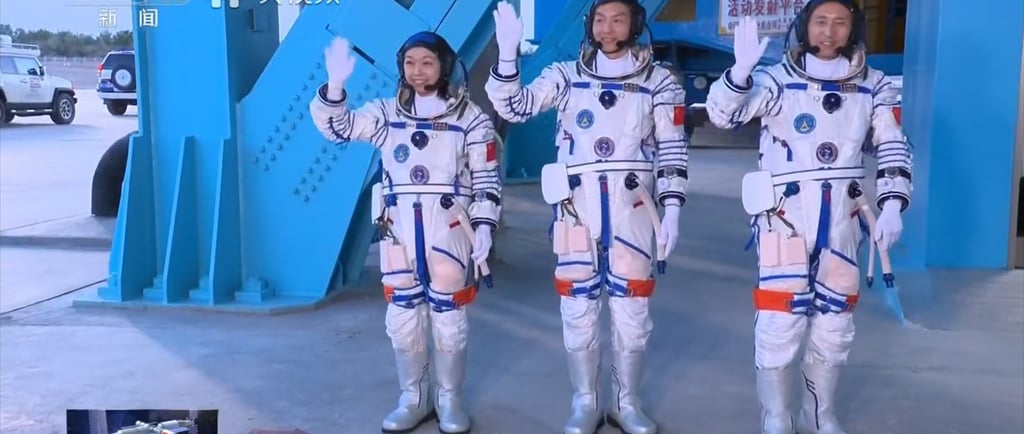
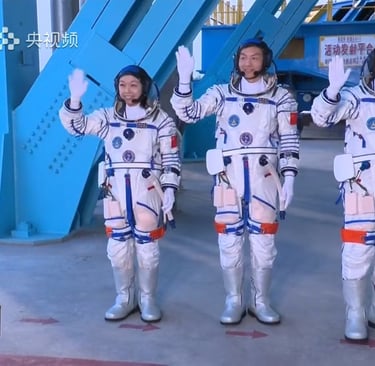
Hong Kong’s first astronaut entering China’s space station is, of course, a historic milestone.
But the real significance may lie beyond symbolism.
The more important question is whether this moment signals a change in Hong Kong’s role within the broader space ecosystem — especially in relation to cross-border commercial space collaboration. With Dr. Lai Ka-ying now flying as part of Shenzhou-23, this is no longer only a story about representation. It may also be a story about how Hong Kong begins to connect more directly to mission systems, research pipelines, and future commercial interfaces.
1. From symbolic inclusion to functional participation
For a long time, Hong Kong’s connection to the national space program was easier to describe in symbolic or educational terms.
This looks different.
If Hong Kong is now contributing not only through public inspiration but also through astronaut participation, mission-linked research, and institutional coordination, then its role is becoming more operational.
There are already concrete examples. Dr. Lai Ka-ying, Hong Kong’s first astronaut to join a spaceflight mission, was selected as a payload specialist for Shenzhou-23 after going through a rigorous selection and over 1,700 hours of training at the China Astronaut Research & Training Center; Hong Kong officials publicly noted that she met mission standards in just over a year. Hong Kong’s contribution is also not limited to people: the HKSAR Government has said that a lightweight greenhouse gas sensor developed by Hong Kong universities was carried to the space station aboard Tianzhou-10. And at the institutional level, the government has been building clearer interfaces with the national space program, including through the Hong Kong Space Robotics & Energy Center under #InnoHK, which was established to support national space missions and related collaboration. This is not entirely new territory either: #PolyU Hong Kong has for years contributed to China’s lunar and deep-space missions through space instrumentation and related research, suggesting that Hong Kong’s role in the national space effort has already had a technical foundation—this mission simply makes that foundation far more visible. Together, these examples suggest that Hong Kong is no longer appearing only as a source of public enthusiasm. It is beginning to show up as a participant in the mission architecture itself.
2. The commercial significance is not immediate market expansion — it is improved connectivity
It would be too simplistic to say that one spaceflight will suddenly create a commercial space boom in Hong Kong.
That is probably not the right interpretation.
The more realistic implication is that it could strengthen Hong Kong’s position as a coordination layer between different parts of the space economy:
Hong Kong universities and research teams
Chinese mainland engineering and manufacturing capacity
national mission systems
international capital, professional services, and collaboration networks
If that role becomes more credible, then Hong Kong could matter not as a full-spectrum space industrial base, but as a place where cross-border collaboration becomes easier to organise.
And that is commercially meaningful.
In strategic sectors, value does not come only from production.
It also comes from the ability to connect systems that do not naturally connect on their own. Hong Kong’s established strengths in international business, legal structuring, professional services, and cross-border coordination make that possibility more plausible than a simple “build another space cluster” story.
3. Why Hong Kong may be more useful as an interface than as a replica of an existing space hub
Hong Kong is unlikely to compete with established mainland space clusters by trying to replicate the same industrial functions.
That would miss the point.
Its comparative advantage is different.
It sits at the intersection of:
research capacity
international business connectivity
financial and legal services
cross-border institutional familiarity
global-facing professional networks
In other words, Hong Kong’s future space role may be less about becoming another manufacturing centre, and more about becoming a gateway for selected forms of collaboration.
That could include:
payload-related research partnerships
space-enabled data applications
commercialization of research outcomes
testing, validation, and technology translation
legal, financial, insurance, and transaction support for space-related activity
That is a narrower claim than saying “Hong Kong will become a major commercial space hub.”
But it is also a more plausible one.
The government’s own framing increasingly points in that direction: building space capability through research, system integration, international collaboration, and talent development. The structure matters, because commercial relevance in space often depends on where a city sits in the value chain of trust, validation, and coordination.
4. The opportunity is real — but it will not be fully open-ended
This is also where the limits matter.
Space is not an ordinary sector.
It touches national security, export controls, sensitive infrastructure, supply-chain trust, and strategic technology governance.
So if cross-border commercial collaboration grows, it is unlikely to be open in a frictionless sense.
It will probably be selective, structured, and bounded.
That means the relevant question is not whether Hong Kong can become a completely open global platform for all kinds of space business.
It is whether Hong Kong can become a trusted node for specific categories of collaboration within clearly defined political and security boundaries.
That may still be highly valuable.
But it is a different proposition from liberalized market expansion.
In practice, the strongest opportunities may emerge not in the most security-sensitive upstream domains but in research collaboration, payload development, downstream applications, technology translation, financing, insurance, and other professional support functions that sit adjacent to core state-led mission systems. That is where Hong Kong’s hybrid position may be most commercially useful. This last point is an inference from Hong Kong’s institutional profile and the kinds of space initiatives publicly highlighted so far, rather than a formal policy guarantee.
The bigger question
So the real issue is not simply whether Hong Kong is now present in orbit.
It is whether this presence marks the beginning of a more durable economic function.
If Hong Kong is moving from symbolic inclusion to functional participation in China’s space ecosystem, could its most important role be not industrial duplication — but selective cross-border commercial coordination?
LU FRONTIER STRATEGIES
© 2024-2026 LU Frontier Strategies. All rights reserved.
